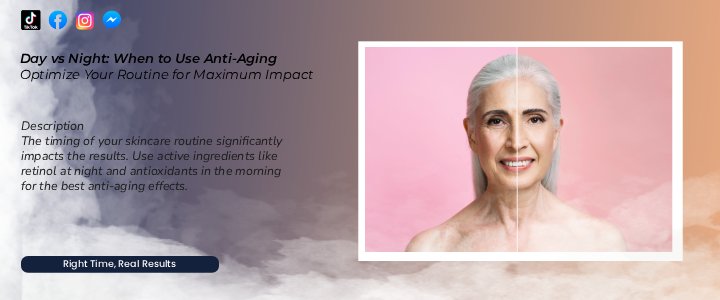

Understanding Anti Aging Skincare
Anti aging skincare has become a key part of many routines, helping reduce fine lines, improve texture, and maintain a youthful glow. But one common question remains: should you apply anti aging ingredients during the day or at night? The answer lies in understanding how certain active ingredients interact with your skin and the environment.
Using the right product at the right time can maximize results while minimizing irritation. Let’s break down which anti aging ingredients are best suited for daytime versus nighttime use.
Anti Aging Ingredients for Daytime
During the day, your skin is exposed to sunlight, pollution, and environmental stressors. This is when protection and support are most important. Anti aging products used in the morning should strengthen the skin barrier, calm inflammation, and work well under sunscreen.
Best Daytime Ingredients
- Niacinamide
This ingredient helps brighten skin tone, reduce redness, and support the barrier. It’s gentle enough for daily use and pairs well with sunscreen. - Peptides
Peptides encourage collagen production and improve skin elasticity. They are non-irritating and provide long-term anti aging benefits when used regularly. - Vitamin C (Optional)
Although not listed as a must, many people use Vitamin C in the morning for antioxidant protection. It helps defend against free radicals and improves overall skin tone.
Why Morning Use Matters?
Daytime products should focus on defense. Think of them as a shield that keeps your skin strong and protected throughout daily exposure.
Anti Aging Ingredients for Nighttime
At night, your skin enters repair mode. This is the perfect time to use stronger active ingredients that may cause sensitivity in sunlight. Night routines allow anti aging products to work deeply while your body rests.
Best Nighttime Ingredients
- Retinol
Retinol is one of the most studied and effective anti aging ingredients. It speeds up cell turnover, reduces wrinkles, and smooths texture. However, it can cause sensitivity, which is why it’s best reserved for nighttime. - AHAs and BHAs (Optional)
Gentle exfoliating acids like glycolic or salicylic acid help remove dead skin cells. Used at night, they allow new skin to regenerate without sun exposure.Day vs Night: Quick Compariso - Hyaluronic Acid
While it can be used both day and night, hyaluronic acid works well in the evening to lock in moisture and support overnight repair.
Why Night Use Matters?
Nighttime is about renewal. Your skin repairs itself, and strong anti aging ingredients can work without interference from UV rays or environmental stress.
Day vs Night: Quick Compariso
Here’s a simple guide to help you match anti aging ingredients with the right time of day:
| Time | Best Anti Aging Ingredients | Key Benefits |
|---|---|---|
| Day | Niacinamide, Peptides, Vitamin C | Barrier support, protection, antioxidant defense |
| Night | Retinol, AHAs/BHAs, Hyaluronic Acid | Cell renewal, smoothing texture, deep hydration |
Tips for Using Anti Aging Products
- Always apply sunscreen in the morning, especially if using retinol or acids at night.
- Introduce one active ingredient at a time to avoid irritation.
- Start slowly with retinol (2–3 nights per week) before increasing frequency.
- Pair hydrating products like hyaluronic acid with stronger actives for balance.
The best anti aging routine depends not only on what products you use but also on when you use them. Niacinamide and peptides protect and support your skin during the day, while retinol and other actives repair and renew at night. By aligning your routine with your skin’s natural rhythm, you can achieve healthier, younger-looking skin over time.
Understanding the timing of anti aging skincare is a simple yet powerful step toward better results. Think of it as working with your skin’s clock—not against it.