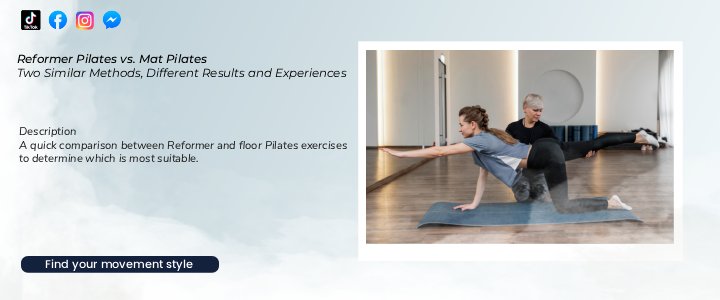

Pilates is booming across the U.S., but not all Pilates is the same. Reformer Pilates (machine-based) and Mat — often called “classic” or “mat” Pilates — both build core strength, mobility, and posture, yet they serve different goals, budgets, and safety profiles. This comparative news piece distills recent reputable coverage so you can decide which style fits your body, schedule, and fitness priorities.
The two news threads we compared
- News item A
The rise and advantages of Reformer Pilates: Recent coverage highlights a clear market shift toward reformer-focused studios, studio expansions, and new at-home reformer offerings. Brands and tech companies are investing in reformer-style programming and equipment to meet growing demand for resistance-based, studio-style training. These developments underline reformer Pilates’ increasing accessibility and commercial momentum. - News item B
Expert guidance and research comparing mat vs. reformer outcomes: Health and medical outlets have recently published comparative guides and reviews that explain physiological differences, recovery implications, and who benefits most from each modality. Coverage synthesizes studies and expert opinions showing both formats improve strength and flexibility — but reformer work often adds measurable resistance, range-of-motion benefits, and different injury-rehab profiles.
Story 1 — Reformer Pilates: business growth, new tech, and studio expansion
What’s happening: Boutique brands and fitness tech firms are expanding reformer classes and creating at-home reformer experiences (e.g., accessory kits and digital reformer programs), turning what used to be studio-only equipment into something more available to a broader audience. Studio expansions and brand HQ openings also confirm the commercial momentum behind reformer offerings.
Why it matters: The combination of specialized equipment (springs, straps, carriage) with smaller class sizes or private instruction enables targeted resistance training, more controlled movement progressions, and higher per-class pricing — drawing both dedicated practitioners and new customers seeking a results-driven, low-impact workout.
Story 2 — Mat (classic) Pilates: accessibility, fundamentals, and evidence
What’s happening: Health outlets and medical summaries emphasize mat Pilates as the foundational practice: affordable, portable, and highly accessible for beginners, rehab patients, and people who prefer bodyweight training. Recent reviews explain how mat work develops core control, mobility, and movement literacy before adding equipment-based resistances.
Why it matters: Mat Pilates remains key to building safe technique and preparing clients for more complex, resistance-based reformer work. It’s also the most cost-efficient way to practice consistently, which matters for long-term adherence and public health outreach.
Core similarities
Shared principles: Both formats emphasize breath, control, precision, core activation, and full-body mobility. They target posture, stabilization, and functional strength rather than only hypertrophy or cardio endurance.
Clinical support: Evidence supports that both mat and reformer Pilates can improve posture, flexibility, and pain outcomes when performed consistently and under proper guidance.
Key differences
- Resistance & intensity: Reformer Pilates uses springs and a moving carriage to add adjustable resistance, allowing greater overload and potentially faster strength gains; mat Pilates relies on bodyweight and small props. This makes reformer work feel more like low-impact strength training.
- Accessibility & cost: Mat Pilates is cheaper (often offered in larger group classes or via free/paid online videos) and can be done anywhere. Reformer classes typically require studio access or expensive equipment, so they cost more and can be less convenient.
- Safety & supervision: The moving parts and straps of reformers can intimidate beginners; instructor supervision in small classes or private sessions is often recommended. Mat Pilates can also cause strain if done with poor form, but it generally carries lower mechanical risk for most people.
- Functional outcomes: Some recent analyses suggest reformer training can produce greater improvements in certain measures (e.g., power, agility, or controlled range-of-motion tasks) because of the resistance and assisted/assisted movement patterns the machine permits. Mat work excels at developing raw motor control and foundational strength.
Why these differences exist (factors driving divergence)
- Equipment innovation & commercialization: Brands and fitness tech makers are developing “home-friendly” reformer accessories and digital content, which accelerates reformer adoption and market growth. This business push changes availability and consumer expectations.
- Consumer fitness trends: Post-pandemic, Americans have shifted toward workouts that blend strength, mobility, and lower injury risk — a sweet spot where reformer Pilates excels and mat Pilates complements.
- Education and certification: Instructor training pathways influence which classes studios prioritize. Reformer certifications can command higher price points and create new revenue streams for studios — incentivizing the expansion of reformer offerings.
Trend forecast / insights
Hybrid adoption: Expect a hybrid ecosystem: mat classes remain widespread and affordable, while reformer offerings grow in urban and suburban studio markets and via premium at-home solutions. Studios that bundle both will likely retain and upsell clients most effectively.
Accessibility push: As at-home reformer accessories and guided digital programs improve, cost-effective pathways into reformer-style training will expand, narrowing the accessibility gap — though full-size reformers will still be a premium experience for the foreseeable future.
Practical takeaways — Who should choose which?
Choose Mat (Classic) Pilates if you are: on a budget; a complete beginner; traveling frequently; recovering from certain injuries and advised to start with gentle bodyweight work; or focused on learning fundamentals and movement control.
Choose Reformer Pilates if you are: seeking faster strength gains with lower perceived joint impact; want more variety and progressive resistance; are looking for guided, studio-level correction; or prefer a results-oriented, small-group or private lesson environment.
Best approach: Try both. Start with mat work to build fundamentals, then add reformer sessions (or reformer-inspired at-home programming) to accelerate strength, stability, and range-of-motion gains.
Conclusion
Both reformer and mat Pilates deliver meaningful, research-backed benefits. Reformer Pilates is emerging as the market’s growth engine — powered by studio expansion and new at-home tech — and it tends to offer faster gains in resistance-driven metrics. Mat Pilates remains the most accessible and essential foundation: inexpensive, portable, and excellent for building movement literacy. For most Americans, the ideal long-term strategy blends both: use mat practice to master fundamentals and reformer sessions to progress strength and precision.
.jpg)